0
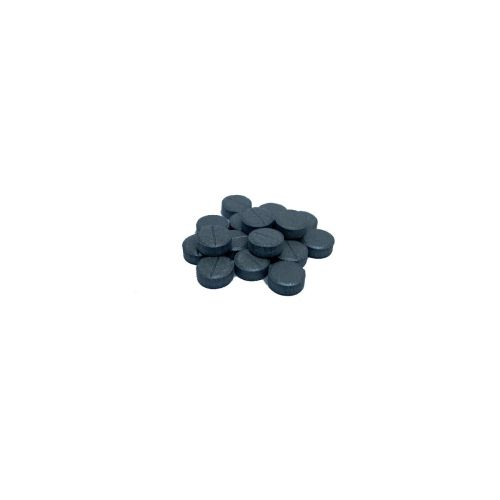
2F-Ketamine Pellets – 50mg
Price range: €12.50 through €750.00
Description
2-FDCK: Chemical Information, Safety and Regulatory Considerations
Introduction
2-Fluorodeschloroketamine, commonly known as 2-FDCK or 2F-DCK, is a synthetic arylcyclohexylamine associated with the broader class of dissociative substances. It is chemically related to ketamine, but it is a distinct compound with its own identity, evidence base, and regulatory considerations.
For laboratory professionals, analytical chemists, and forensic researchers, understanding the identity and limitations of available information about 2-FDCK is important when evaluating chemical records, analytical findings, and safety documentation.
This guide summarizes its chemical identity, analytical identification, safety considerations, documentation requirements, and the importance of checking applicable laws. It does not provide instructions for human consumption or promote unverified industrial applications.
What Is 2-FDCK?
2-FDCK is the abbreviation for 2-fluorodeschloroketamine. The United Nations Office on Drugs and Crime lists the substance among phencyclidine-type substances and classifies its effect group as dissociatives.
Its chemical name is 2-(2-fluorophenyl)-2-(methylamino)cyclohexan-1-one.
Chemical identification
The following identifiers are recorded in public chemical reference databases:
- Common name: 2-Fluorodeschloroketamine
- Abbreviations: 2-FDCK and 2F-DCK
- CAS Registry Number: 111982-50-4 for the free base
- Molecular formula: C₁₃H₁₆FNO
- Molecular weight: approximately 221.27 g/mol for the free base
- Chemical class: Arylcyclohexylamine
These identifiers refer to the free-base compound. Salt forms have different identifiers and molecular weights, so researchers should confirm the exact chemical form recorded in any analytical or inventory documentation.
A chemical name or database entry alone does not verify the identity, purity, or composition of an unknown sample.
Chemical Properties and Research Context
2-FDCK is chemically related to ketamine and other arylcyclohexylamine compounds. However, structural similarity does not establish that two substances have identical pharmacological properties, toxicity, or safety profiles.
Scientific information about newer psychoactive substances can be limited. Published analytical and clinical reports may help establish that a substance has been detected and characterize certain exposures, but they do not necessarily establish a complete profile of its long-term effects or risks.
Claims about melting point, solvent solubility, storage stability, purity, or suitability for a particular manufacturing process should be supported by reliable references or validated, compound-specific laboratory data. Values should not be inferred from related chemicals.
Analytical Identification and Quality Documentation
Correct chemical identification is an important part of analytical chemistry and forensic laboratory work. Product labels, online descriptions, and nominal mass values are not sufficient on their own to confirm the composition of a sample.
Depending on the purpose of an investigation, appropriately equipped laboratories may use validated analytical methods and suitable reference materials to investigate chemical identity and composition.
Understanding analytical reports
When reviewing an analytical report, consider the following:
- Sample identification: Confirm that the report clearly identifies the submitted sample and its associated batch or reference number.
- Method information: Check which analytical method was used and whether it is appropriate for the stated purpose.
- Reference materials: Determine whether suitable reference materials and comparison data were used.
- Results and limitations: Review the reported findings, uncertainty, and any limitations stated by the laboratory.
- Traceability: Ensure the report can be linked to the correct sample and retained records.
An analytical result should be interpreted within the scope of the method used. For example, evidence of a compound’s identity does not automatically establish its purity or the absence of other substances.
Certificates of Analysis
A Certificate of Analysis (CoA) records analytical results for a defined sample or batch. Where a CoA is provided, readers should examine its issuing laboratory, sample identification, test methods, reported results, dates, and acceptance criteria.
A CoA should not be treated as proof of quality unless its authenticity and relevance to the material in question can be established. No specific purity percentage or batch specification should be assumed without verifiable supporting documentation.
Safety Considerations
2-FDCK is associated with dissociative effects, and published clinical reports have documented serious effects in people exposed to the substance, including altered consciousness, agitation, abnormal behaviour, cardiovascular changes, and seizures.
The available evidence does not establish a comprehensive safety profile. The presence of related compounds in some reported cases can also complicate the interpretation of observed effects.
Laboratory risk assessment
Any legitimate laboratory assessment should begin with a review of applicable laws, available hazard information, and the procedures approved by the responsible institution.
Relevant considerations include:
- Reviewing the available Safety Data Sheet (SDS) and any identified gaps in hazard information.
- Assessing possible exposure routes and the consequences of accidental contact or release.
- Establishing appropriate controls and personal protective equipment based on a competent risk assessment.
- Maintaining suitable labeling, access controls, and documented handling procedures.
- Following institutional procedures for incidents, waste, and emergency response.
Where reliable hazard information is unavailable, the absence of a documented hazard should not be interpreted as evidence that a substance is safe.
2-FDCK should not be treated as suitable for human or animal consumption, and this article does not provide medical or consumption guidance.
Storage, Labeling, and Chemical Records
Chemical storage requirements should be based on verified information for the specific material and its chemical form. Generic recommendations cannot substitute for a suitable SDS, supplier documentation that has been verified, or an institution’s approved risk assessment.
Records maintained by a laboratory should clearly identify the material, its source, the relevant batch or sample number, the date of receipt, and the location of associated documentation.
Labels should not make unsupported claims about purity, hazard classification, or intended use. Any applicable legal restrictions and institutional access requirements should also be reflected in the laboratory’s procedures.
Regulatory Considerations in Europe and International Markets
The legal status of 2-FDCK varies by jurisdiction and can change over time. Requirements may differ across countries and may cover possession, manufacture, distribution, importation, exportation, research authorization, or other activities.
A chemical’s presence in a public database does not mean that it is approved for medical use, unrestricted commercial sale, or lawful possession in every country.
Before undertaking any activity involving this substance, relevant organizations should consult current official legislation and the appropriate national authorities. They should also confirm whether institutional approvals, permits, or other restrictions apply.
International movement of a substance should never be assumed to be permitted simply because a carrier can transport chemical materials generally. Applicable controls must be checked for the substance, its form, the origin, the destination, and the proposed activity.
Scientific Evidence and Its Limitations
Published forensic and clinical research has reported confirmed 2-FDCK exposures and described neurological and cardiovascular effects. Such reports are important for identifying potential hazards, but individual studies have limitations, including sample size, possible co-exposure to other substances, and incomplete information about the material involved.
Readers should distinguish between:
- Established chemical identifiers: Information recorded in recognized reference databases.
- Reported analytical findings: Results obtained in specific investigations using stated methods.
- Preliminary safety evidence: Findings that may indicate hazards but do not establish every possible effect.
- Unverified claims: Product specifications, purity statements, or proposed applications without adequate supporting evidence.
This distinction helps prevent preliminary findings or marketing statements from being mistaken for validated scientific conclusions.
Frequently Asked Questions
What does 2-FDCK stand for?
2-FDCK stands for 2-fluorodeschloroketamine, a synthetic arylcyclohexylamine associated with the dissociative substance group.
Is 2-FDCK the same as ketamine?
No. Although the compounds are chemically related, they are distinct substances. Their properties, effects, risks, and legal status should not be assumed to be identical.
Can a label confirm the identity of a sample?
No. A label is a claim about a sample, not independent proof of its composition. Reliable identification depends on appropriate analytical evidence and traceable documentation.
Does a Certificate of Analysis guarantee purity?
Not by itself. The report must be authentic, relevant to the specific sample or batch, and supported by suitable methods and clearly reported results.
Is 2-FDCK legal throughout Europe?
Its legal status should be checked for each relevant country and activity. Do not assume that a substance is unrestricted throughout Europe because its status differs elsewhere.
Is 2-FDCK established as a general industrial chemical?
The available sources cited for this article identify 2-FDCK as a dissociative substance and document analytical and clinical concerns. They do not establish the broad coating, polymer, cleaning, or other industrial applications claimed in some promotional descriptions.
Additional information
| Quantity in Pellets | 5, 10, 25, 50, 100, 250, 500 |
|---|
10 reviews for 2F-Ketamine Pellets – 50mg
Related products
-

Pink Star Pellets 5-MAPB 70mg / 2-FMA 20mg / 5-MeO-MiPT 2mg
Price range: €35.00 through €420.00 Select options This product has multiple variants. The options may be chosen on the product page -

βOH-2C-B Pellets – 60mg
Price range: €16.00 through €110.00 Select options This product has multiple variants. The options may be chosen on the product page -
5-MeO-MiPT Pellets – 15mg
Price range: €34.95 through €399.00 Select options This product has multiple variants. The options may be chosen on the product page -

4-HO-MET Pellets – 20mg
Price range: €25.00 through €300.00 Select options This product has multiple variants. The options may be chosen on the product page
Giorgio Wisniewski –
Alles was precies zoals beschreven. Snelle verzending en duidelijke communicatie, ik zou hier opnieuw bestellen.
Matteo Schmidt –
The experience felt smooth, and every step felt well managed. The delivery experience was smooth.
Simone Sidorov –
Esperienza positiva dall’inizio alla fine. Il prodotto era ben confezionato e conforme alla descrizione.
Vladimir VanDijk –
Everything moved along smoothly, with timely confirmation messages. Delivery matched the expected timeframe.
Milan Lemaire –
Ordering was easy, while information remained easy to understand. The entire process felt dependable.
Niels Pereira –
Checkout felt straightforward, and the experience stayed stress free. Customer support was quick to respond.
Karel Roy –
Service fiable et produit conforme. Je recommanderais sans hésiter.
Riccardo Johansson –
La experiencia fue positiva. El producto coincide con la descripción y el embalaje fue correcto.
Bogdan Becker –
Overall a great experience. The product arrived well packed, worked exactly as described, and the ordering process was smooth from start to finish.
Edward Karlsson –
Getting started was effortless, with useful notifications along the way. The package arrived on schedule.